The Three-Second Fear Response
The moment a roller coaster crests its first hill, your body launches into a cascade of chemical reactions that evolution designed for a very different purpose. Your adrenal glands flood your bloodstream with adrenaline and cortisol. Your heart rate spikes. Your pupils dilate. Every sensory system goes to maximum alert, preparing you to fight a predator or flee a danger that, in reality, is nothing more than gravity and steel doing exactly what they were engineered to do.
This is the fundamental paradox of roller coasters: your body genuinely believes it's in danger, but your conscious mind knows it's safe. That gap between primal fear and rational knowledge creates a unique emotional cocktail — exhilaration, euphoria, relief and pride, all compressed into a ride that typically lasts less than three minutes. According to research published by the International Association of Amusement Parks and Attractions, this combination of perceived risk and actual safety is what makes coasters so compelling across every age group and culture.
Why Some People Love It
Not everyone enjoys roller coasters, and the difference isn't just about bravery. Psychologists have identified a personality trait called sensation seeking — a need for varied, novel and intense experiences. People who score high on sensation-seeking scales are more likely to enjoy extreme sports, spicy food, horror films and, yes, roller coasters. It's not that they don't feel fear — they do — but they've learned to interpret that fear as excitement rather than threat.
Dopamine plays a role too. The anticipation of a thrill triggers dopamine release in the brain's reward centres before the ride even begins. That slow climb up the lift hill, with its clicking chain and expanding horizon, is neurologically similar to the build-up before any rewarding experience. By the time you drop, your brain is already primed to interpret the sensation as pleasurable. It's a feedback loop: anticipation, thrill, relief, satisfaction — and then an immediate desire to do it again.
The Design of Fear
Roller coaster engineers understand human psychology as well as they understand physics. The classic lift hill exists not because it's the most efficient way to gain potential energy — a launch coaster can accelerate to the same speed in seconds — but because the slow ascent builds psychological tension. The pause at the top, the moment of weightlessness, the first plunge: these are emotional beats designed as carefully as any film score.
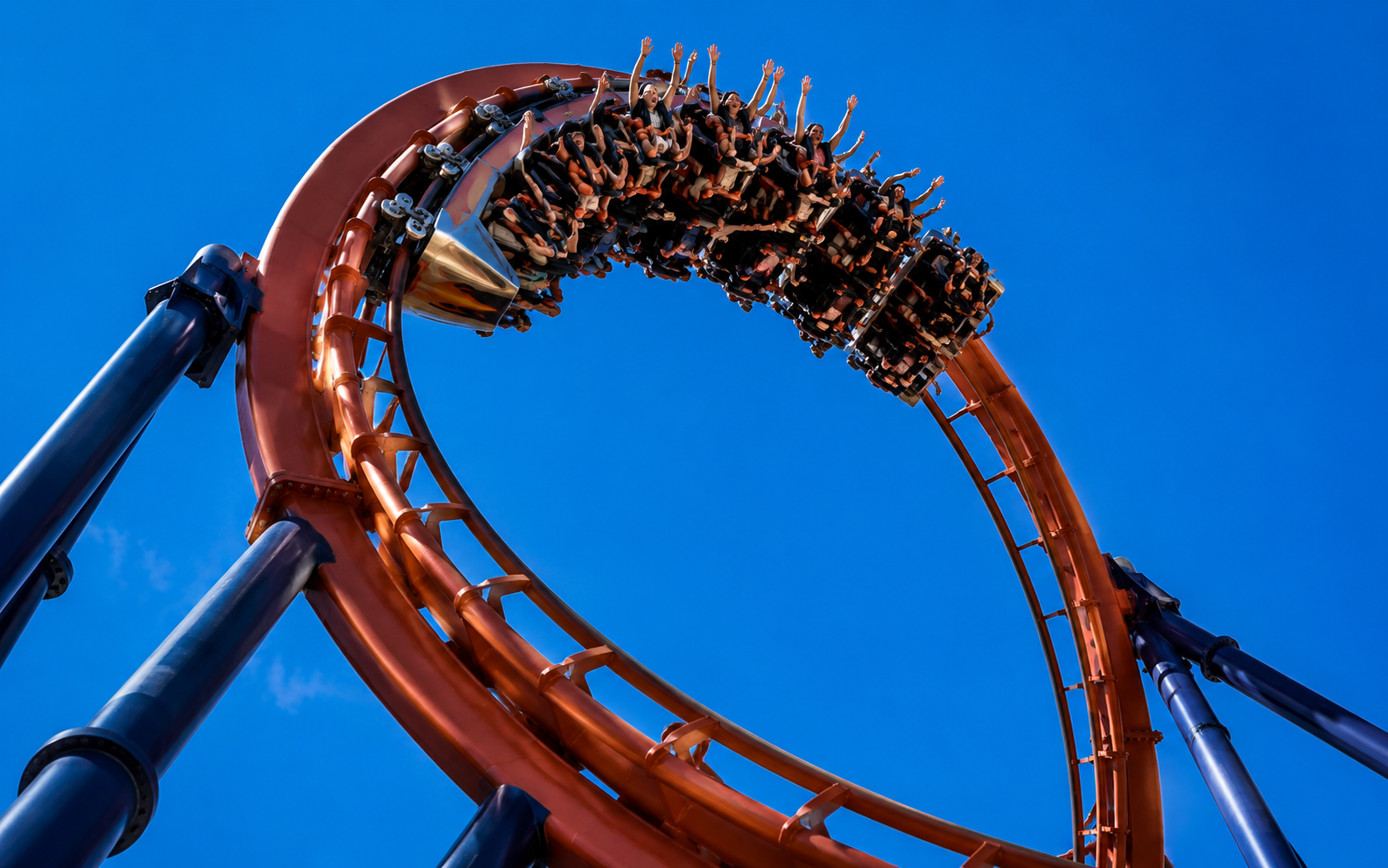
Modern coasters use tricks that exploit specific fears. Inverted coasters remove the floor beneath your feet, triggering fear of falling. Wing coasters seat you beyond the track's edge, amplifying exposure. Dark coasters plunge you into blackness, removing visual cues and forcing your vestibular system to work overtime. Each innovation targets a different aspect of the human fear response.
The Afterglow
The most interesting part of the roller coaster experience may be what happens after. Research suggests that shared intense experiences — including theme park rides — strengthen social bonds between participants. The nervous laughter, the shaking hands, the "let's go again" — these moments create memories that are emotionally richer than almost any other form of entertainment. A roller coaster doesn't just give you three minutes of adrenaline. It gives you a story, a shared experience and a small, personal triumph over fear. That's worth queuing for.